



31 Mar Autumn Muslim-Friendly Trip: Three-Day in Okayama with Nanako

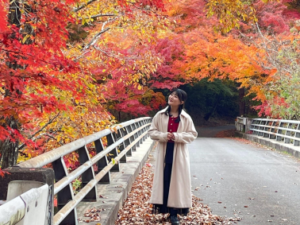
Okayama offers Muslim travelers a refreshing way to explore Japan, where cultural heritage, scenic landscapes, and Muslim-friendly facilities come together. Through this article, we invite you to follow the journey of Nanako, a Japan-born content creator who is fluent in Indonesian, with 1.7 M followers on TikTok and 498 K on Instagram.
Let’s join Nanako on her three-day journey from November 17–19, 2025, as she explores the many sides of Okayama through an itinerary thoughtfully designed to be inclusive for all travelers, including Muslim visitors.
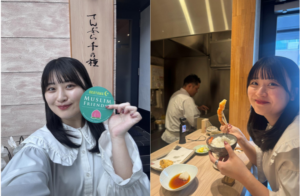
The journey begins with a Shinkansen ride from Shin-Yokohama Station to Okayama Station—showcasing Okayama’s excellent connectivity with major cities across Japan. Upon arrival, Nanako had her first meal at Tempura Sen no Tane, a restaurant known for accommodating Muslim guests offering authentic tempuras at a reasonable price. The variety of fresh seafood and vegetables are fried directly in front of visitors elevating your appetite.
In the afternoon, Nanako tries the famous Chuggington Tram, and then continues to Farmstay Micchan by car. In this farmstay, Nanako can experience rural Okayama firsthand. This farmstay provides a warm and personal atmosphere, allowing travelers to relax in a natural setting while engaging with the local hosts. This farmstay experience offers visitors to know more about the local culture through food and some activities such as making sushi, learning to make mochi from scratch, and making ordinary Japanese staple dishes which are Muslim-Friendly.

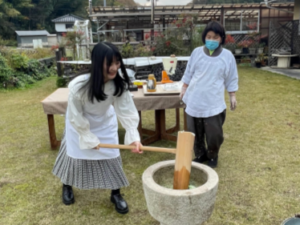
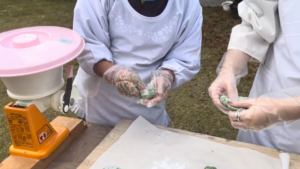
This first day emphasizes comfort and cultural immersion, setting a welcoming tone for the journey ahead and highlighting Okayama’s diverse accommodation options for Muslim travelers.
Day two of Nanako’s journey begins with a visit to Hiruzen Kogen Center, located in the highlands of northern Okayama. Known for its fresh air and panoramic views, Hiruzen offers a peaceful retreat surrounded by nature. The area also provides dining options suitable for Muslim travelers, making it an ideal stop for both sightseeing and lunch.


After making a lunch stop, Nanako’s itinerary then continues to Kibitsu Shrine, a historic site deeply connected to the legend of Momotaro or also known as the “Peach boy”—one of Japan’s most beloved folktales. The shrine’s 360-m long covered corridor and tranquil grounds makes this temple special and one-of-a-kind. Its architecture also allows visitors to appreciate traditional Japanese architecture and spiritual culture along the corridor.
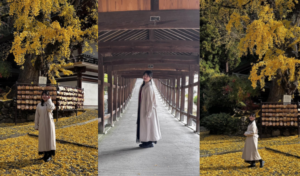
Not only is it traditional Japanese architecture, the scenery at Kibitsu Shrine during autumn is also very impressive with a mixture of red and yellow leaves that elevate the experience of visiting the temple.
Later in the afternoon, after strolling around the shrine and learning more about the legendary story of Momotaro, Nanako visited the Manekineko Art Museum which is a unique place that introduces the cultural significance of Japan’s iconic cat/manekineko. Not only are they able to buy some of the cat statues, but visitors can also make their own manekineko that depicts their own characters and make it a unique souvenir.

Nanako’s 2nd day is halfway done and in the evening, she checked-in at Hotel Granvia Okayama known for its location that is connected to Okayama Station. Its accessibility makes it a popular choice for international travelers, including Muslim guests seeking comfort and ease of movement. This hotel also provides Muslim-friendly amenities that will surely make your stay more comfortable and hassle free. A prayer room is available, along with rental services for prayer mats and Qibla Compass.
Then it is not Japan without shopping, Nanako continues her journey by shopping at AEON Mall Okayama, where she can find a wide range of dining options, prayer-friendly facilities, and international brands. Dinner at Ishikawa Shokudo, known for its Muslim-friendly approach by using vegetables and fish grown locally to ensure travelers can enjoy local flavors with peace of mind. The menu in Ishikawa Shokudo might change frequently, so make sure to ask for a vegan and non-alcohol menu before visiting.

The 2nd day concludes with a visit to Okayama Korakuen Fantasy Garden (Gensho Teien), where seasonal illuminations transform the garden into a magical nighttime landscape. In this garden, visitors can find colorful bamboo lanterns, candlelit pathways, and glowing installations along the pond and lawn. A fantastical view can also be seen from the reflections of the pond “Sawa-no-ike”.
A short stop at Ujo Togenkyo (Crow Castle) further enhances the evening with a serene atmosphere, where the castle lits gracefully, the surrounding of Okayama Castle come alive with Japanese umbrella lanterns and bamboo art installations titled “Autumn Night Dreams” near the entrance, creating a nighttime ambiance that feels romantic.
The third day of Nanako’s journey might be the end, but the fun in Okayama still continues by first visiting the famous and well-known Okayama Korakuen Garden. Its maintained landscapes, ponds, walking paths, and the autumn view definitely offer a peaceful start to the day.
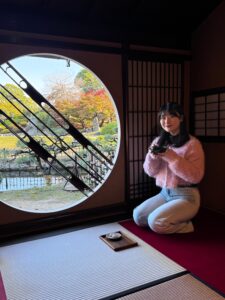

At Korakuen, Nanako tries Japanese tea at Sazanami Chaya, while admiring the view of Korakuen Garden from the tea room. Furthermore, the day in Okayama has not been complete without visiting the iconic jet black Okayama Castle. The castle stands as a symbol of Okayama’s history and offers scenic views of the surrounding area. Nanako also hopped into the peach boat to give visitors a full view surrounding the area—making the trip to Okayama much more unforgettable.

After spending most of the day around Korakuen, Nanako stopped for lunch at Hitori Nabe Megu, a specialized hot-pot restaurant for shabu-shabu and sukiyaki that offers halal -designated pots for Muslim travelers. The restaurant also serves Australian halal certified beef, making the lunch experience more enjoyable.
After lunch, a stop at Momotaro Jeans where the place offers visitors insights into the history of Okayama’s jeans industry as well as shopping their own style of jeans. Later in the afternoon, Nanako’s journey continues to the Kurashiki Bikan Historical Quarter, where white-walled storehouses, traditional streets, and canal views create a nostalgic atmosphere. This area allows travelers to explore at a relaxed pace while appreciating Japan’s historical charm.

Nanako’s journey in Okayama is almost ended by stopping by the Halal Center near Okayama Station where she is having her last dinner in Okayama. The journey ends with a return Shinkansen ride to Shin-Yokohama Station.
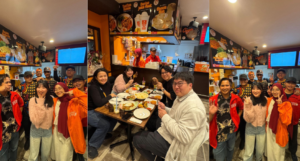
The “Muslim-Friendly Trip in Okayama with Nanako” itinerary highlights how Okayama is actively creating an inclusive travel environment. From Muslim-friendly dining and convenient accommodations to cultural experiences and scenic destinations, the region offers a balanced and thoughtful travel experience.
Through continued efforts to improve facilities and awareness, Okayama wanted to be a destination where Muslim travelers can explore Japan with confidence, comfort, and cultural appreciation.
Okayama Muslim Tourism (OMT) is an organization run by Okayama City, Kibichuo Town, and Maniwa City. Through OMT, you can find information about various tourist destinations, muslim-friendly restaurants, and accommodations that meet the needs of Muslim travelers. OMT also assists in arranging travel plans such as student exchange programs, conventions, and etc.
Okayama City / Kibichuo Town / Maniwa City
▼ Check more articles about destinations and itineraries:
- Discover Okayama’s Autumn: A 3-Day Muslim-Friendly Trip with Dahlia Shazwan
- Muslim-Friendly Winter Trip in Okayama: Experience the Magic of Yuki-Koi Festival with Muslim Network Tour